Scrubbing the teak with a stiff brush and detergent can remove some of the black grain. The black is probably mildew that developed from freshwater. After you remove most of the black with soap and water, a teak cleaner can remove more. Sanding is probably the last step.
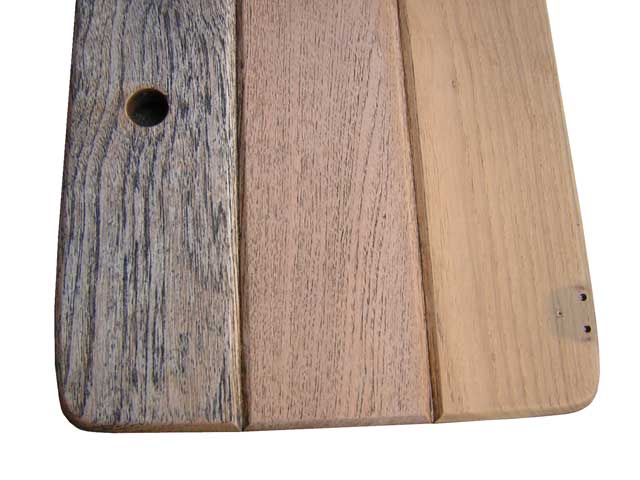 Fig. 1. Teak in three stages of re-finishing
Figure 1 above shows a teak hatch cover in three stages of finish in 2007. The left board shows the weathered teak. The finished had degraded to this state after about two seasons of use. At that time my boat spent most of its life covered and in indoor storage, out of direct sunlight and rain. But even with that protection, the teak had weathered. The wood had begun to turn gray and black lines infested the grain.
The center board has been scrubbed and cleaned using a popular teak cleaning solvent, Amazon Teak Cleaner. The wood is wetted and the cleaner applied with a scrubby-sponge. This removes most of the black grain lines and generally brightens the teak.
The right board has been both cleaned and sanded. The sanding was done with a vibrating type sander and used paper of about 120-grit. This step removes some wood, and sanding should be undertaken only as a last resort, removing as little wood surface as possible. Also, teak sawdust can be quite irritating. I wear a mask and sand outdoors.
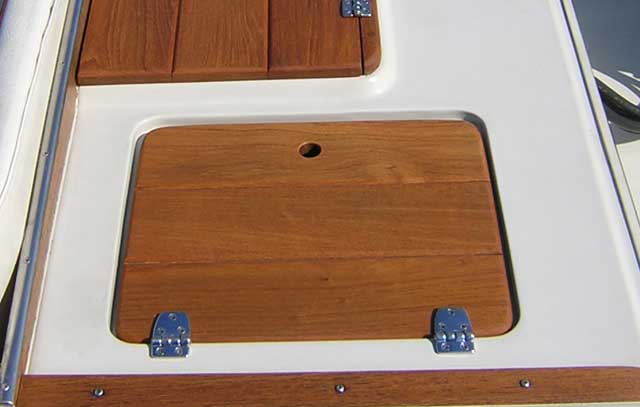 Fig. 2. The same teak hatch after application of Teak Prep and Amazon Teak Oil
In Figure 2 above the teak hatch was treated with a preparatory product, Amazon Teak Prep, which seems to be a very light oil with some volatile solvent. It is supposed to help remove any trace of the cleaner and neutralize the wood. This coat tends to evaporate off the wood, although it does darken it and leaves a bit of finish. After the Teak Prep has dried, the teak was oiled with Amazon Golden Teak Oil. I have had this particular bottle for years, so it may not be the freshest possible oil. Several coats of oil are applied and allowed to soak into the teak.
The above work on the teak was done in 2007. This finish is still in fairly decent condition in 2022, about 15 years later. During that epoch I changed to using a different teak oil, WATCO Teak Oil. If the oil finish is maintained several times each season, it will reduce the infestation of the black lines. The WATCO teak oil worked much better than the original teak oil I was using. However, after 15 years I think the teak needs to be restored again.
WATCO Teak Oil seems to contain a bit of varnish or a varnish-like substance. If you apply the oil very heavily, after about two days of drying the surface of the teak will have a harder finish and will cause water to bead up.
In general I think better maintenance of the oil finish should prevent growth of mildew.
The topic of cleaning teak has been discussed before. Here are some links for you to read:
Wood Care and the Boston Whaler Boathttps://continuouswave.com/whaler/refer ... rWood.htmlCleaning Teakhttps://continuouswave.com/ubb/Forum3/HTML/017103.htmlTeak Finishhttps://continuouswave.com/ubb/Forum3/HTML/014322.htmlWATCO Teak Oil is also recommended in the above discussion and more details about its use is given therein.
ASIDE: There is a funny story behind my move to WATCO Teak Oil. Many years ago we were spending a day and night aboard our boat in Big Tub Harbour at Tobermory, Ontario, Canada, on the Bruce Peninsula of Georgian Bay, Lake Huron. Nearby our berth was a very nice 40-footer in Bristol condition and with a beautiful teak swim platform. The owner was busy that morning cleaning the boat, clearly the key to maintaining it in such great condition. I stopped to chat with him. I commented about the nice appearance of the teak, and asked what product he used.
The fellow reached into a deck locker and produced a can of WATCO Teak Oil. "Here," he said, "try this." I did not initially accept his offer, as I didn't think the teak on my boat was ready for more oil right at that moment. But the fellow insisted I take the can of teak oil, and said he was done with it. He said he was done with oiling the teak, and he was going to change to some other finish or some other material, something that did not need such constant upkeep, as the swim platform was just too much work, particularly with it constantly getting wet in freshwater. I hesitated to take his offer, but he was insistent that his days of oiling the teak swim platform were done, and I should take the oil or he'd just throw it out. I eventually accepted his kindness. I still have that can today, although it is almost gone.